Underground Marriage Co-Sleeping Law
Bride of AlvarThe Underland Wedding-Night Law is a custom governing the public and private performance of royal marriage in Underland. It requires a newly married king and queen to spend the wedding night together, or to create that appearance, because the union must be recognized as genuine by the people and by the wider political order of Axus. In Lucy Hammond’s forced marriage to Alvar, the rule becomes a mechanism of state legitimacy and a direct test of bodily autonomy: Alvar accepts the appearance required by the law, while Lucy refuses to let it determine sexual consent.
Definition and Political Function
The law is presented as an old Underland requirement attached to the public credibility of a royal marriage. Alvar explains that he must spend the night in Lucy’s room because the king’s departure would cause scandal and make the marriage appear false. The rule therefore does more than regulate domestic arrangements. It turns the couple’s sleeping arrangements into visible evidence of political unity, making private space part of royal governance.
Its importance is intensified by the circumstances of the marriage. Alvar has told Lucy Hammond that she was promised to him before birth as an Earth-human bride, and the written agreement binds her future marriage to a peace treaty between Earth and Axus. Her mother, Hannah Delaney, was promised that Alvar would retrieve Hannah and her daughter once the child came of age, while Underland would provide for them and protect them through the Underland Guard and the Institute of Underland. The wedding-night custom operates within that larger treaty system: the marriage is not treated as a merely personal arrangement, but as an instrument intended to prevent war.
Application to Lucy and Alvar’s Wedding
Leeza tells Lucy that Alvar will join her in her elaborate West Wing bedroom on the wedding night. She also says that Lucy must not go to Alvar’s quarters unless summoned or given approval. The arrangement places Lucy under royal supervision while making her room the designated site where the marriage will be demonstrated. Lucy reacts with fear because she has only just met Alvar and understands the expected shared night as potentially sexual.
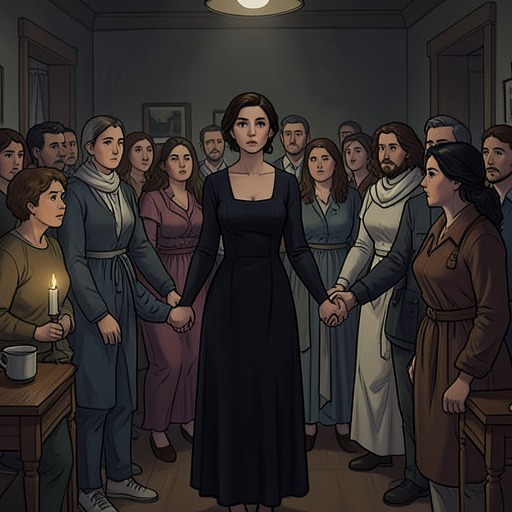
The wedding itself is hurried because Emily Hall has been abducted and faces execution under the gobli custom of being torn apart on a Star Wheel. Alvar says that sealing the marriage will make killing Earth humans a crime against Underland and will give him grounds to order Emily’s freedom. He therefore treats the ceremony as an emergency legal and diplomatic act. The wedding is staged before hundreds of waiting people in a chapel-like space, with Lucy’s mother holding the train of her wedding dress and a human priestly figure blessing the couple. Alvar drinks from a gold goblet, then gives it to Lucy to finish, reinforcing the ceremony’s formal and public character.
Shared Room and Sexual Consent
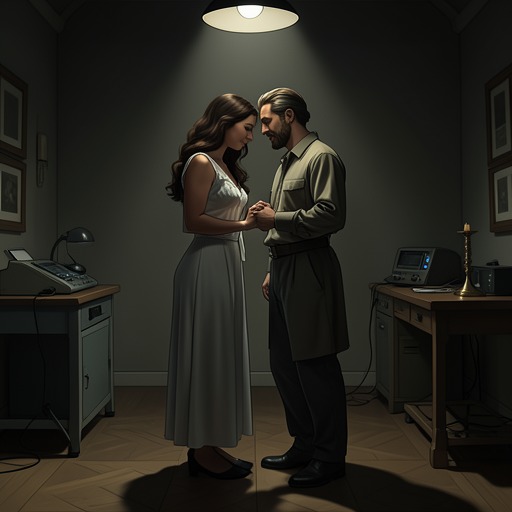
Lucy explicitly distinguishes compliance with the wedding from sexual submission. She tells Alvar that she will marry him to save Emily but will not have sex with him. Alvar answers that he did not expect intercourse and that they can give the appearance that he is treating Lucy as his wife. He still says that he must spend the night with her because the old law must be followed if the rest of Axus is to take the marriage seriously.
This exchange exposes the law’s internal contradiction. It can compel proximity and performance, but it does not automatically establish consent. Lucy’s apparent agreement is limited and conditional: she accepts Alvar sleeping in the room, while rejecting the sexual meaning that court custom tries to attach to the arrangement. Alvar’s withdrawal of his hand when she objects, his statement that he respects her desire, and his acceptance of her boundary do not erase the coercive circumstances, since the marriage itself is driven by the threat to Emily and the danger of war. They do, however, prevent the wedding-night rule from being treated as an unquestionable license over Lucy’s body.
The scene also places the law beside the history of Lucy’s betrothal. The agreement declares that the female child Hannah carried would become Alvar’s future wife and queen, and Lucy is told that denying the arrangement would be an insult capable of provoking war. The wedding-night custom thus continues a chain in which political authorities translate a prenatal promise into adult marital obligations. Lucy’s refusal marks the point at which the treaty’s language encounters a living person who can still set a limit.
Public Appearance and Palace Space
After the ceremony, Alvar says he will remain nearby so the marriage will look official to the people. Lucy jokes nervously that it would be scandalous if the king left when he was supposed to be with his queen. Alvar joins the joke and says that the king is instead sleeping on the floor while merely dreaming of being with his queen. The humor briefly softens the rule’s threat, but it also confirms its central principle: appearances are politically consequential even when the private reality differs.
The palace later clarifies that the king’s living quarters are in the East Wing and Lucy’s are in the West Wing. Grey explains that it is not customary for the king and queen to live in the same part of the palace; only when they copulate do they sleep in the same room, as a safety precaution. This spatial arrangement makes the wedding-night law an exception to ordinary royal separation. The couple’s rooms are normally divided by palace protocol, but marriage temporarily joins them under a rule that treats shared sleeping space as both intimate conduct and institutional proof.
Consequences and Significance
The law helps Alvar secure the immediate political effect he needs. By marrying Lucy and presenting the union as valid, he can declare that harm to Earth humans is an offense against Underland and pressure Remora to release Emily. The custom therefore participates in a wider legal transformation: a private-looking ritual is used to convert Lucy’s status into protection for another Earth human and to strengthen Alvar’s authority against hostile powers.
At the same time, the rule reveals how Underland’s institutions govern bodies through expectation, surveillance, and scandal. Lucy is taught etiquette as a queen, placed in a royal bedroom, told where she may go, and informed that the king’s presence must be maintained for public belief. Yet the narrative repeatedly separates institutional performance from emotional truth. Lucy’s marriage begins as a treaty obligation and an emergency strategy, not as a freely chosen romance; the wedding-night law can demand the performance of union, but it cannot by itself create trust, affection, or sexual willingness.
Its lasting significance lies in that distinction. The law makes royal marriage legible to society by requiring the couple to occupy the same room, while Lucy’s resistance insists that public legitimacy and private consent are different kinds of authority. Alvar can comply with the custom without forcing intercourse, and Lucy can endure the political ceremony without surrendering every personal boundary. The resulting compromise exposes both the reach and the limit of Underland’s marital order: it can organize space, reputation, and diplomacy, but it cannot fully dictate what the marriage means to the people inside it.